
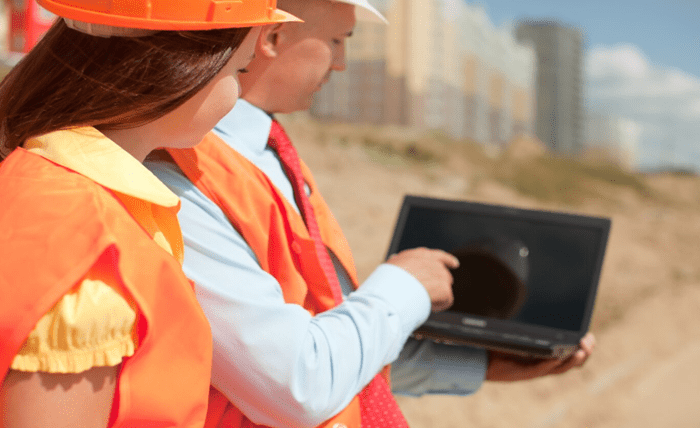
Construction is an inherently hazardous business. In the United States, according the Bureau of Labor, 9.6 fatalities occured per hundred thousand workers in the sector in 2023. These incidents overwhelmingly stemmed from a handful of causes – including slips, falling objects, and electrocution.
Increased awareness of these problems, and improved procedures for anticipating and dealing with them, have helped to reduce overall fatality rates, and drive up productivity across the industry. But increasingly, technology is playing a role in making sites safer – both through improved personal protective equipment, and more elaborate electronic means.
The Rising Demand for Smarter Safety Systems
The more quickly that site workers can react to an emerging safety threat, the more likely that it will be diffused before anyone is hurt. You might think of a fire breaking out because of sparks in a dry, sawdust-coated outbuilding. If there’s a fire extinguisher handy, the blaze might be smothered before it has a chance to spread. If there isn’t, the result might be orders of magnitude worse.
Increasingly, site operators are making use of a range of tools to observe and eliminate safety threats. In many cases, this involves asking machines to perform tasks that could not safely be performed by a human being. Drones might be used to survey sites from on high, for example. The use of robots to carry heavy equipment across uneven terrain might also be considered in the coming years.
High-Risk Zones and Emergency Stop Technology
Risk is rarely spread evenly across a given site. Rather, it’s likely to be concentrated in areas where workers cross paths with one another, and where inherently hazardous work is being carried out. You might think of a table saw station, for example.
Workers should be made aware of the hazards they encounter. Emergency stop technology might also be employed, so that the power can be switched off as quickly as possible in the event of a threat. The difference of a few seconds, in these situations, can often be crucial.
The Role of Cable Pull Switches in Emergency Planning
Often, it isn’t practical for switches to be mounted on surfaces. Instead, machinery might be brought to a halt with the help of cable-pull switches or rope-pull switches. This can help a worker to remain within reach of an emergency stop, even if the task they’re performing takes place away from any fixed structure.
Integrating Safety with Daily Operations
Safety shouldn’t be a consideration that’s weighed as an afterthought. It should be baked into every aspect of life on a site. The cost of a failure on the site operator, in terms of damage to reputation and morale, can be considerable, and that’s before we even consider the impact of court proceedings. The right planning and equipment can help to create a workforce that’s confident, productive, and happy.