
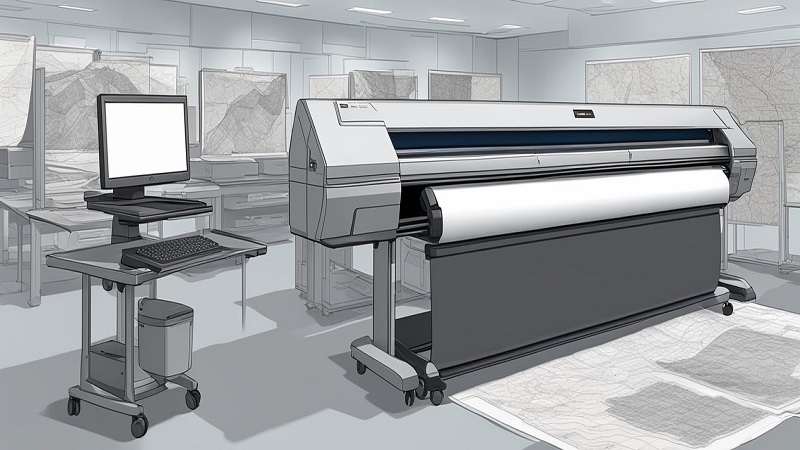
When preserving or digitizing oversized documents, standard scanners simply won’t cut it. Large format scanning offers a specialized solution for handling maps, posters, blueprints, drawings, and fine art that exceed typical paper dimensions. These high-resolution scanning systems capture every detail with precision, maintaining the integrity of intricate lines on blueprints and the subtle color variations in artwork.
Large format scanning transforms unwieldy physical documents into manageable digital files that can be easily stored, shared, or reproduced without degradation in quality. This technology has revolutionized how architects preserve blueprints, how cartographers archive historical maps, and how artists digitize their portfolio pieces.
The benefits extend beyond mere convenience. Organizations utilizing large format scanning report significant space savings, improved document security, and enhanced collaboration capabilities. Whether you’re an engineering firm with decades of technical drawings or a museum with a collection of vintage posters, large format scanning provides the ideal bridge between physical preservation and digital accessibility.
Understanding Large Format Scanners
Large format scanners provide specialized solutions for digitizing oversized documents with precision and detail. These sophisticated devices combine advanced imaging technology with robust hardware to capture everything from architectural blueprints to historical maps.
Key Features and Technologies
Large format scanners utilize CCD (Charged Coupled Device) imaging technology for superior image quality. This technology employs multiple sensors that capture different portions of the document simultaneously, resulting in exceptional clarity and color accuracy.
Most professional models offer optical resolutions ranging from 600 to 1200 dpi, essential for preserving fine details in technical drawings and artwork. The scanning speed varies between 1-12 inches per second, depending on the selected resolution and document type.
Color accuracy is achieved through wide color gamut support, with advanced scanners capable of reproducing both Adobe RGB and sRGB color spaces. This precision is critical for graphic professionals and reprographics departments requiring color-critical output.
Modern scanners feature specialized Fujifilm lenses and X-Rite ICC profiles to ensure dimensional accuracy and color fidelity across the entire scanning surface.
Comparison of Popular Brands and Models
The market leaders in large format scanning include Contex, HP, and Colortrac, each offering distinct advantages for different applications.
Contex HD Ultra X stands out for best-in-class image quality, with its 48-bit color depth and 9600 dpi enhanced resolution. This premium scanner excels in archival and fine art reproduction scenarios.
HP’s wide format scanners prioritize productivity, offering exceptional scanning speeds up to 12 inches per second in color. Their integration with HP printing systems makes them ideal for reprographics departments.
Colortrac SmartLF models provide an excellent balance of performance and affordability. Their SingleSensor technology ensures consistent image quality across the entire scan width.
|
Brand |
Top Model |
Max Width |
Resolution |
Speed (color) |
|
Contex |
HD Ultra X |
54″ |
1200 dpi |
8 ips |
|
HP |
SD Pro |
44″ |
1200 dpi |
12 ips |
|
Colortrac |
SmartLF Gx+ |
42″ |
1200 dpi |
6 ips |
Selecting the Best Large Format Scanner for Your Needs
When choosing a large format scanner, organizations should first assess their typical document types and volumes. Engineering firms handling numerous blueprints daily require different capabilities than museums digitizing occasional historical maps.
Budget considerations should extend beyond initial purchase price to include maintenance costs, software licenses, and potential media expenses. Premium models may offer better longevity and lower total cost of ownership despite higher upfront investment.
Technical specifications like optical resolution, scanning width, and color accuracy deserve careful evaluation. For archival purposes, higher resolution and color fidelity are essential, while production environments might prioritize speed and reliability.
Software compatibility is often overlooked but critical. The scanner should integrate with existing workflows and support industry-standard file formats. Most manufacturers offer proprietary software, but compatibility with Adobe Creative Suite and Esri GIS products may be necessary for specialized applications.
Optimizing Scanning Workflows and Outputs
Effective workflow optimization in large format scanning can significantly reduce processing time while maintaining exceptional quality. The right combination of hardware features, quality control processes, and document management solutions creates a seamless end-to-end scanning operation.
Enhancing Productivity with Advanced Features
Modern large format scanners incorporate numerous productivity-boosting features that streamline operations. Superspeed USB3 and Gigabit Ethernet connections enable rapid data transfer, reducing bottlenecks when handling high-volume jobs. Production scanning environments benefit from higher scanning speeds of up to 15 inches per second for monochrome documents.
Intelligent Document Size Detection eliminates manual size input, automatically adjusting settings for mixed-size document batches. This feature is particularly valuable for technical and CAD drawing offices processing various blueprint dimensions. Automated Paper Thickness Control adjusts scanner parameters in real-time, preventing damage to delicate originals while maintaining optimal feed rate.
The integration of MFP (Multi-Function Peripheral) capabilities allows users to scan directly to network folders, email, or cloud storage without intermediate steps. This digital workflow enhancement reduces handling time by approximately 40% compared to traditional scan-to-computer methods.
Maintaining Image Quality and Color Accuracy
High-quality output begins with advanced imaging technology. Scanners equipped with 48-bit CCD technology capture subtle color variations essential for accurate reproduction of architectural renderings and detailed maps. The 1200dpi optical resolution ensures fine line clarity in technical documents and small text legibility.
Contex Natural Light technology, with its high Color Rendering Index, reproduces colors with exceptional accuracy. This feature proves crucial when scanning historical maps or artwork where color fidelity matters. High Dynamic Range capabilities preserve detail in both shadows and highlights, particularly important for blueprints with varying line densities.
Color calibration tools allow operators to match output to standardized color profiles. Regular calibration maintains consistency across projects and devices. Optimized color imaging algorithms reduce artifacts and distortion, particularly valuable when scanning folded maps or wrinkled documents that might otherwise produce shadows or uneven reproduction.
Archiving and Document Management Solutions
Effective document management transforms scanned images into searchable, accessible assets. Integration with document management systems enables metadata tagging for quick retrieval based on project numbers, drawing types, or creation dates. OCR (Optical Character Recognition) capabilities extract text from title blocks on technical documents, making content searchable.
ScanStation solutions combine hardware and software for turnkey archiving operations. These systems often include specialized interfaces for direct integration with AutoCAD and other technical applications. Version control features track document revisions, essential for managing iterative design processes.
Cloud-based archiving solutions provide secure, redundant storage with permission-based access. This approach proves particularly valuable for on-site building services requiring document access from multiple locations. Automated backup protocols ensure document preservation, while format conversion tools produce PDF/A files specifically designed for long-term archiving with embedded metadata and optimized file sizes.