
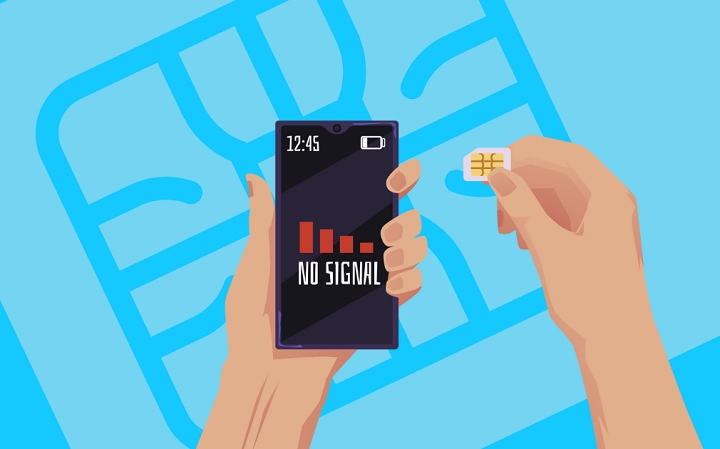
So your phone suddenly says:
- “No signal”
- “No service”
- “Emergency calls only”
And now nothing works. Yeah, that gets annoying fast. One second your phone is fine. Next second? Zero bars. No internet. Calls fail instantly. And honestly? A lot of people immediately think the worst.
They assume:
- the SIM card died
- the phone broke
- the carrier blocked them
- the network crashed forever
But most of the time? The issue is fixable. In 2026, phones got smarter and networks got faster. But signal problems still happen constantly. And since our phone numbers now connect to:
- banking apps
- OTP verification
- work accounts
- social media
- digital wallets
- messaging apps
…losing signal feels like losing half your online life too. The good news? Most “no signal” SIM issues come from common problems people can troubleshoot pretty quickly. Let’s break everything down step by step.
What Does “No Signal” Mean?

“No signal” basically means your phone cannot connect properly to your carrier’s network.
Without that connection, your phone can’t:
- make calls
- send texts
- use mobile data
- receive OTP codes
- access mobile services
Your SIM card might still work perfectly. The phone just isn’t connecting to the network correctly.
Common Signs of a No Signal SIM Problem
People usually notice things like:
- empty signal bars
- “No Service” message
- “Emergency Calls Only”
- failed calls
- texts not sending
- mobile data not working
Sometimes the signal disappears suddenly. Other times it gets weaker slowly.
Why SIM Cards Lose Signal
There are many possible reasons. Some are tiny issues. Others are carrier-related.
Temporary Carrier Outage
Honestly? This is super common.
Telecom providers sometimes experience:
- tower maintenance
- overloaded systems
- regional outages
- technical failures
If lots of nearby users also lose signal, it’s probably the network.
Weak Coverage Area
Sometimes the signal simply can’t reach your location properly.
This happens often in:
- elevators
- underground parking
- rural areas
- mountains
- thick concrete buildings
SIM Card Not Inserted Properly
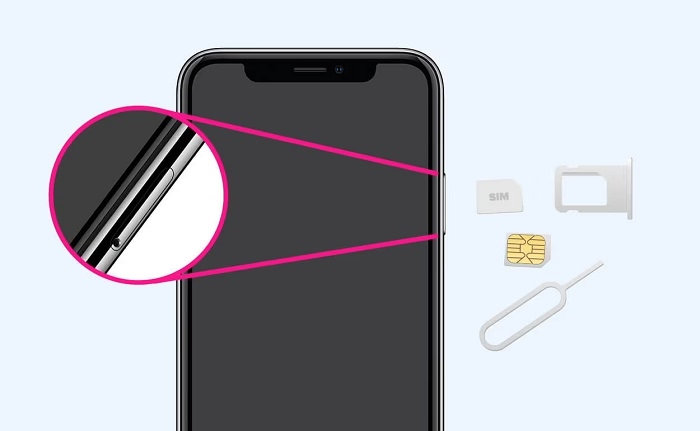
A slightly loose SIM can break the network connection. Even tiny movements matter.
Damaged SIM Card
SIM cards wear out over time. Especially older ones.
Damage may include:
- scratches
- cracked chips
- bent SIMs
- water damage
Airplane Mode Accidentally Enabled
Yep. People do this constantly. Sometimes airplane mode turns on accidentally and blocks all mobile connections.
Phone Software Problems
System bugs can interrupt network communication.
Especially after:
- phone updates
- failed updates
- crashes
- beta software installs
Carrier Settings Problems
Phones need updated carrier settings to connect correctly. Old settings may create signal issues.
SIM Registration Issues
Many countries now require active SIM registration. Failed registration may stop network access entirely.
Inactive Prepaid SIM
Prepaid users see this often.
Carriers may deactivate unused SIMs after long inactivity.
Usually if users:
- stop reloading
- stop calling
- stop texting
for several months.
Network Congestion
Busy places can overload towers.
Especially during:
- concerts
- festivals
- sports events
- emergencies
Phone Hardware Damage
Sometimes the issue isn’t the SIM card at all. The phone’s internal antenna may be damaged from:
- drops
- water exposure
- physical damage
eSIM Signal Problems
eSIM users can also experience signal failures.
Common causes include:
- failed activation
- profile corruption
- network syncing errors
First Things to Try
Before visiting a repair shop, try some simple fixes.
Restart Your Phone
Seriously.
This solves lots of temporary network glitches.
Toggle Airplane Mode
Turn airplane mode on for about 30 seconds. Then turn it back off. This forces the phone to reconnect to networks.
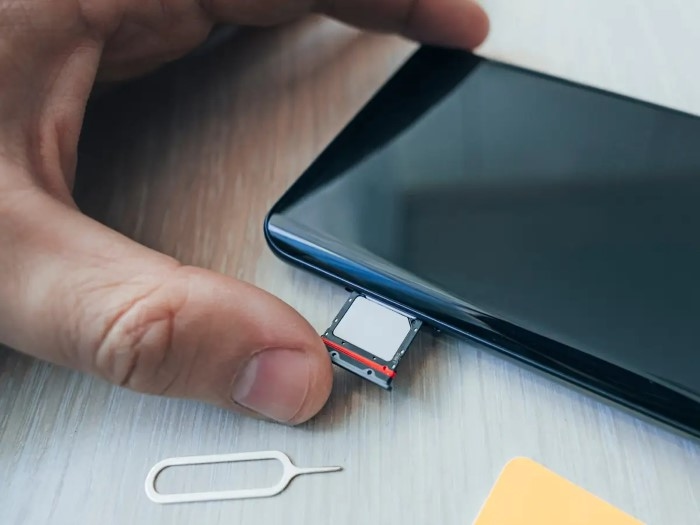
Remove and Reinsert the SIM
Take out the SIM tray carefully.
Check for:
- dirt
- scratches
- moisture
- improper positioning
Then place it back properly.
Clean the SIM Card
Use a soft dry cloth only. Never use liquids.
Move to Another Area
Sometimes the issue is just weak coverage.
Try going:
- outdoors
- near windows
- outside crowded buildings
Check if Others Have Signal
Very useful test.
If everyone nearby lost signal too, it’s probably a network outage.
Update Phone Software
Old software sometimes causes carrier communication problems.
Reset Network Settings
Phones usually offer network reset options that restore:
- mobile settings
- carrier settings
- Wi-Fi settings
without deleting personal data.
Try Another SIM in Your Phone
This helps identify if the problem comes from:
- the SIM card
- or the phone itself
Test Your SIM in Another Phone
If your SIM works elsewhere, the phone may be damaged.
Contact Your Carrier
If easy fixes fail, contact the telecom provider.
They can check:
- outages
- activation status
- SIM suspension
- registration problems
SIM Replacement May Be Needed
Sometimes SIM cards simply fail completely. Especially older ones.
In that case, carriers usually:
- replace the SIM
- transfer your number
- reactivate service
Can You Keep Your Number?
Usually yes.
Most carriers allow number transfer to replacement SIMs.
Why Signal Problems Feel Worse Today
Years ago, no signal mostly meant missing calls.
Now though?
Your phone number connects to:
- banking apps
- login verification
- password recovery
- digital wallets
- remote work systems
That’s why signal loss feels much more serious now.
Common “No Signal” Error Messages
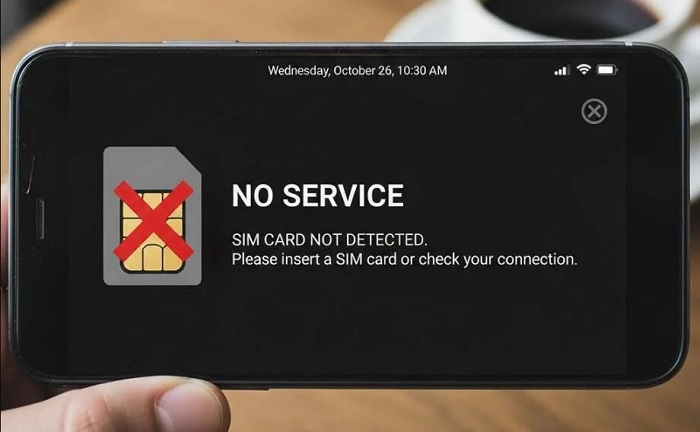
Different phones display different warnings.
Like:
- “No Service”
- “Searching…”
- “SIM not registered”
- “Emergency Calls Only”
- “Network unavailable”
Why Travelers Often Lose Signal
Travel creates lots of signal issues because of:
- roaming restrictions
- unsupported networks
- carrier incompatibility
- tourist SIM activation delays
Why 5G Sometimes Causes Signal Problems
5G coverage still varies heavily.
Phones sometimes switch constantly between:
- 5G
- 4G LTE
- weaker networks
This can create unstable service.
Can Weather Affect Mobile Signal?
Actually, yes.
Severe weather can affect:
- network towers
- signal quality
- carrier infrastructure
Especially during storms.
SIM Problems After Phone Updates
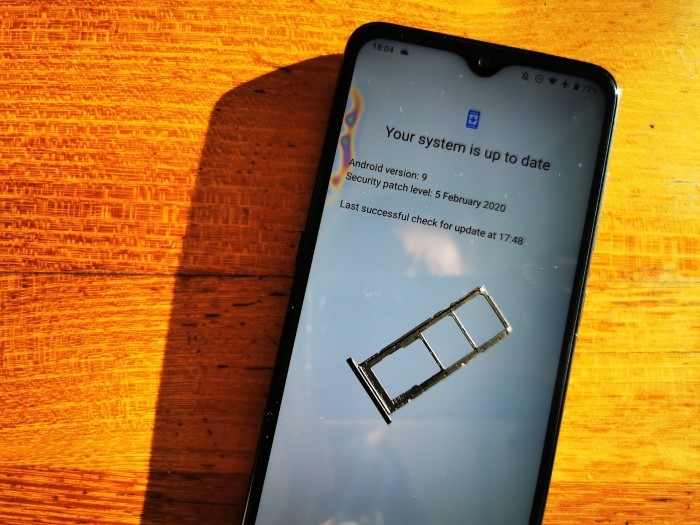
Some updates accidentally create network bugs. Usually fixed later through patches.
Common SIM and Signal Scams
Be careful online.
Scammers may send fake carrier messages asking users to:
- verify SIM accounts
- click fake links
- provide OTP codes
Never share verification codes with strangers.
Tips to Avoid Future Signal Problems
Some easy habits help a lot.
Keep SIM Cards Clean
Dust and moisture create issues.
Use Official Carrier SIMs
More reliable.
Keep Phones Updated
Helps network compatibility.
Avoid Cheap SIM Adapters
Poor adapters damage trays.
Check Coverage Before Traveling
Very important in remote areas.
Can Factory Reset Fix Signal Problems?
Sometimes software-related ones.
But not:
- carrier outages
- damaged SIM cards
- broken antennas
Quick Summary Table
| Problem | Possible Cause |
| No signal | Weak network |
| Emergency calls only | SIM or registration issue |
| Signal disappears randomly | Carrier congestion |
| SIM works elsewhere | Phone problem |
| No service after update | Software bug |
| Weak 5G signal | Coverage issue |
| Inactive prepaid SIM | Carrier deactivation |
FAQs
Why does my SIM card say no signal?
Usually because of network, SIM, or phone connection problems.
Can restarting the phone help?
Very often yes.
How do I know if the SIM is damaged?
Test it on another phone.
Can carriers fix no signal problems?
Absolutely.
Why does the signal disappear indoors?
Buildings can block mobile signals.
Can old SIM cards lose signal permanently?
Yes.
Can eSIMs also lose signal?
Definitely.
Should I replace the SIM if nothing works?
Possibly yes.
Honestly, no-signal SIM problems happen to almost everyone eventually. The good thing though? Most cases are fixable without needing a brand-new phone.
Whether the issue comes from:
- weak coverage
- SIM damage
- carrier outages
- software bugs
- inactive accounts
- network congestion
…there’s usually a solution available. The biggest thing is figuring out whether the problem comes from:
- the SIM card
- the mobile network
- or the phone itself
And once you narrow that down, fixing things gets way easier.