
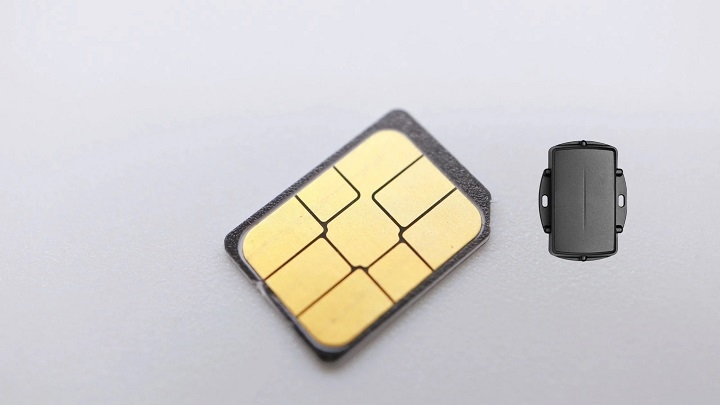
A lot of people search for SIM card trackers now. Usually after something stressful happens.
Maybe:
- a phone got stolen
- a SIM card went missing
- strange activity appeared on an account
- someone wants to track a family phone
- a person lost their device somewhere
And honestly? People get confused fast. Some think SIM cards have GPS inside them. Others believe any SIM can be tracked instantly from anywhere. And then there are fake apps online promising “secret SIM tracking” that sound super sketchy. Here’s the truth. SIM cards themselves don’t exactly work like GPS trackers. But phone companies and connected devices can still help identify locations and network activity in several ways.
In 2026, SIM tracking became much more connected to:
- mobile networks
- phone security
- Find My Device systems
- telecom verification
- account recovery tools
So let’s break the whole thing down in a simple and realistic way.
What Is a SIM Card Tracker?
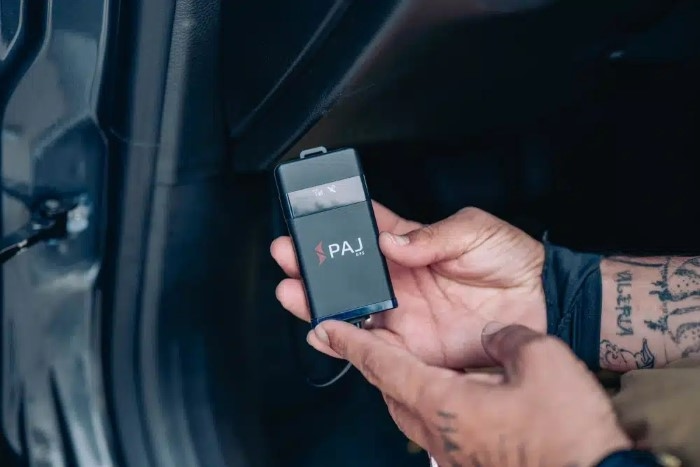
When people say “SIM card tracker,” they usually mean tools or systems that help locate:
- a phone using a SIM card
- network activity
- mobile device location
- carrier connection information
The SIM itself doesn’t contain a full GPS tracker. But the phone connected to it can communicate with nearby mobile towers and online systems. That’s how approximate location tracking becomes possible.
How SIM Tracking Actually Works
A SIM card connects your phone to a telecom network. Whenever your phone is active, it communicates with nearby towers.
The carrier system can often identify:
- which tower your phone connected to
- the approximate area
- recent network activity
- whether the SIM is active
This is not always exact GPS-level tracking though.
SIM Cards vs GPS Tracking
People mix these up constantly.
They are different things.
SIM Tracking
Uses:
- mobile network towers
- carrier systems
- telecom connections
Usually gives approximate locations.
GPS Tracking
Uses satellites and device location services. Usually much more accurate. Most modern smartphones combine both systems together.
Why People Search for SIM Card Tracking
There are lots of reasons.
Lost Phones
This is the biggest one.
People lose phones everywhere now.
Stolen Devices
Users hope tracking helps recover stolen phones.
Family Safety
Parents sometimes track family devices for safety reasons.
Business Devices
Companies often monitor work phones.
SIM Security Problems
People sometimes want to know if their SIM was moved into another device.
Can Telecom Companies Track SIM Cards?
Yes, to a degree.
Carriers can usually identify:
- active network connections
- nearby tower usage
- recent SIM activity
- approximate locations
But exact tracking access is heavily restricted in many countries.
Usually only:
- law enforcement
- emergency services
- authorized investigations
can request deeper carrier tracking data legally.
Can You Track a SIM Yourself?
Not directly through the SIM alone.
But you can track phones connected to SIMs using services like:
- Find My iPhone
- Find My Device
- Samsung Find
- family safety apps
- device management systems
These work through the phone itself, not the SIM alone.
What Happens If Someone Removes the SIM?
This changes things.
If a thief removes the SIM:
- mobile service stops
- carrier connection breaks
- some tracking methods fail
But many smartphones can still track through:
- Wi-Fi
- GPS
- internet access
Especially modern iPhones and Android devices.
SIM Card Tracking and Stolen Phones
This became a huge issue lately.
Modern stolen-phone protection often includes:
- SIM locking
- Find My Device systems
- activation locks
- account verification
- remote erase options
These matter much more than SIM tracking alone.
Can a SIM Reveal Your Identity?
In many countries now, yes.
SIM registration laws often connect numbers to:
- your real name
- ID card
- address
- account verification
That’s why SIM security matters more now.
Can Someone Spy Using Your SIM?
People worry about this a lot. Normally, just having your number alone doesn’t allow full spying.
But stolen SIM access can create risks involving:
- OTP theft
- password resets
- account recovery attempts
- social media access
That’s why losing a SIM became more serious now.
What Is SIM Swapping?
SIM swapping is a major security problem. This happens when scammers trick a telecom company into moving your number onto their SIM card.
Once successful, they may intercept:
- banking OTP codes
- login verification texts
- password reset messages
This is one reason telecom security became stricter in 2026.
Signs Your SIM Might Be Compromised
Watch for strange things like:
- sudden loss of signal
- OTP texts stopping
- unknown account logins
- banking alerts
- SIM suddenly inactive
These may point to SIM-related security problems.
What to Do If Your SIM Is Lost
Act fast.
Usually you should:
- contact your carrier immediately
- block the SIM
- change important passwords
- notify your bank if needed
- enable Find My Device systems
Can eSIMs Be Tracked Too?
Absolutely. eSIMs still connect through telecom networks like regular SIMs.
They can still interact with:
- carrier towers
- mobile services
- device tracking systems
SIM Tracking Apps in 2026
There are lots of apps claiming to track SIM cards. Some are legitimate. Others are complete scams.
Legitimate tracking apps usually work through:
- GPS
- internet access
- account syncing
- family sharing systems
Not magic SIM spying.
Common Fake SIM Tracker Scams
Be careful online.
Fake “SIM tracker” tools often try stealing:
- passwords
- banking details
- OTP codes
- payment info
Huge red flag if an app promises:
- secret tracking
- invisible spying
- illegal monitoring
How Phone Tracking Really Works Today
Modern phones usually combine:
- GPS
- Wi-Fi positioning
- mobile towers
- Bluetooth systems
- account syncing
That’s why modern phone recovery became much more advanced than old SIM-only systems.
Why SIM Security Matters More Than Ever
Years ago, SIM cards mostly handled calls.
Now phone numbers connect to:
- banking apps
- digital wallets
- social media
- online authentication
- email recovery
- work systems
That’s why protecting your SIM became a major security issue.
Can Police Track SIM Cards?
In many countries, yes under legal procedures.
Usually through:
- telecom carrier cooperation
- tower records
- device identification systems
But this normally requires legal authorization.
Can Airplane Mode Stop SIM Tracking?
Mostly yes temporarily.
Airplane mode disconnects:
- carrier towers
- mobile data
- active network communication
Without network communication, tower tracking becomes difficult.
How to Protect Your SIM Card
Some smart habits help a lot.
Use SIM Lock or PIN Protection
Adds another security layer.
Never Share OTP Codes
Very important.
Enable Two-Factor Authentication
Extra account protection helps.
Contact Your Carrier Fast if the SIM Disappears
Speed matters.
Watch for Strange Network Behavior
Unexpected signal loss may matter sometimes.
Quick Summary Table
| Topic | Reality |
| SIM card tracking | Approximate network tracking |
| GPS tracking | More accurate |
| Telecom provider tracking | Limited but possible |
| SIM swap risk | Serious security issue |
| eSIM tracking | Also possible |
| Fake tracker apps | Very common online |
FAQs
Can a SIM card be tracked?
Yes, approximately through mobile networks.
Does a SIM card contain GPS?
No.
Can I track my lost phone using the SIM?
Usually through phone tracking systems, not the SIM alone.
What is SIM swapping?
A scam where criminals steal your phone number digitally.
Can eSIMs be tracked too?
Yes.
Are SIM tracker apps real?
Some are legitimate. Many are scams.
Can police track SIM cards?
In many places, yes through legal processes.
Should I block a lost SIM immediately?
Absolutely.
Honestly, the idea of “SIM card tracking” sounds much more mysterious than it really is. SIM cards themselves aren’t magical GPS trackers. But modern phones, telecom networks, and online systems together can still provide useful location and security information. And because phone numbers now connect to so many personal systems, protecting your SIM became incredibly important in 2026.
Whether you’re dealing with:
- lost phones
- stolen devices
- security concerns
- suspicious activity
- account protection
acting quickly and using official carrier tools matters much more than random “tracker apps” online.