
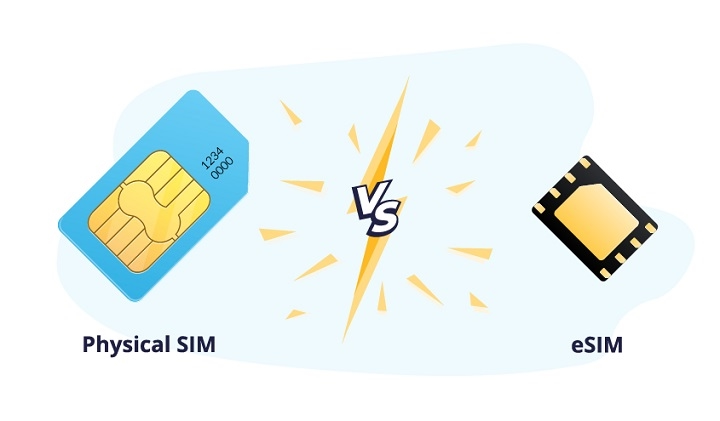
Remember when you got a new phone? Super easy back then. You’d grab that tiny SIM card. Pop it in. Boom. Done. But now? It’s different. Lots of phones have this thing these days. And people get mixed up about it.
They ask stuff like:
- Which is better?
- Does eSIM work faster?
- Is the old SIM card safer?
- Will I keep my phone number?
- What about when I travel?
…and so on. Here’s the real deal though. Both do the same job. They connect your phone to the network. But how they work? Totally different. Those plastic SIM cards? Been around forever. eSIM is the new kid. All digital and stuff. And tons of people are trying to pick one. Let’s check them both out.
What Is a Physical SIM?
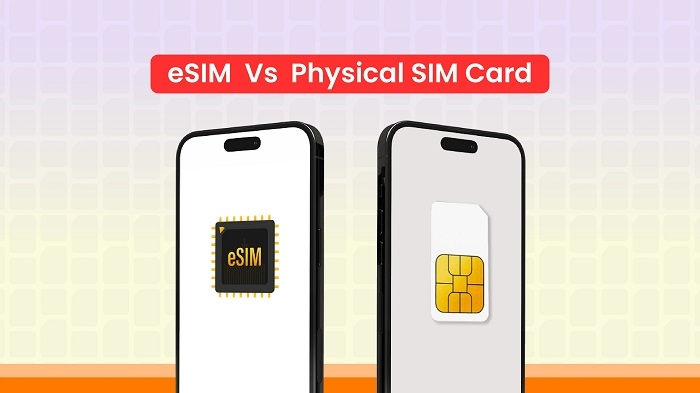
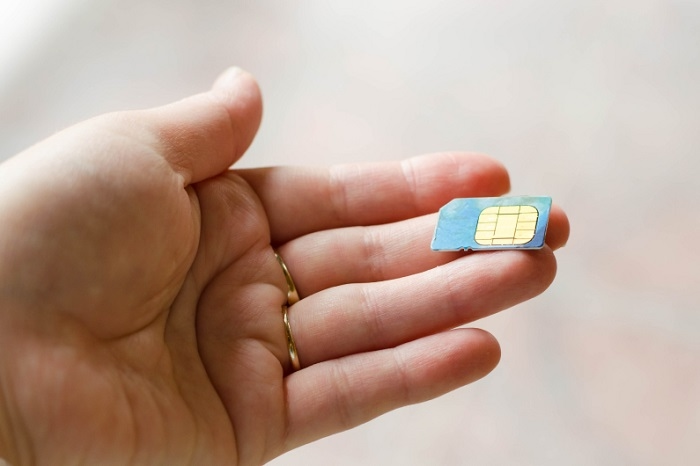
You know that tiny plastic card? That’s a physical SIM. It slides into your phone.
That little chip has:
- your phone number
- who your carrier is
- stuff that proves it’s you
- network settings
Without it? No calls. No texts. Nothing.
What Is an eSIM?
eSIM means “embedded SIM.” Think of it like the SIM is already inside your phone. No plastic card needed. No slot to open. No swapping around. Your carrier just turns it on. Like magic!
They do it through:
- QR codes
- carrier apps
- online setup
The Biggest Difference
Want the simple version?
Physical SIM
- you can take it out
- it’s a real card
- you put it in yourself
eSIM
- stuck inside the phone
- turns on digitally
- no card to touch
That’s basically it.
How Physical SIM Work
You know the drill.
You:
- buy a SIM card
- slide it in
- turn it on
- start calling people
Need a new phone? Just move the card over. People like this. It’s easy to get.
How eSIM Works
With eSIM:
- no card to put in
- it all happens online
Here’s what you do:
- scan a QR code
- maybe use an app
- download some stuff
Then your phone connects. Pretty cool, right?
Why eSIM Is Growing Fast
More people use eSIM every year.
Here’s why.
No Physical Card Needed
This is huge.
You never have to:
- open tiny trays
- carry extra cards
- lose them somewhere
Easier Carrier Switching
Lots of carriers let you switch online now. Way faster than before.
Better for Travelers
People who travel love this. No more hunting for SIM cards in airports.
Instead you can:
- buy plans online
- turn them on right away
- switch when you need to
Multiple Profiles
Cool thing about new phones?
You can have:
- several eSIMs ready
- different carrier accounts
All on one phone.
Why Physical SIM Cards Are Still Popular
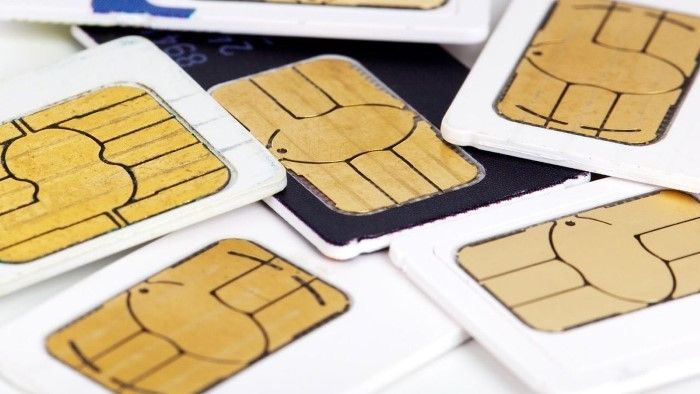
Even with eSIM getting big, regular SIM cards are everywhere.
Easy Phone Transfers
Moving your number is simple. Pull out the card. Put it in the new phone. Done.
Universal Compatibility
Pretty much every phone takes them.
Works with:
- old phones
- new phones
- cheap phones
Familiar Process
Everyone knows how they work. No need to learn new stuff.
Security Comparison
People always ask which is safer.
Physical SIM Security
Regular SIM cards are pretty safe.
But someone could:
- steal them
- take them out
- use them in another phone
That’s a risk.
eSIM Security
You can’t pull out an eSIM. Makes some theft harder. Security folks often say eSIM is safer.
Because:
- no card to steal
- better checks when turning on
- carriers verify more stuff
What Happens If You Lose Your Phone?
This is where things get different.
Physical SIM
A thief might pull out your SIM card. Not good.
eSIM
The eSIM stays inside. Carriers usually check more before moving your number.
Which Is Better for Travel?
eSIM usually wins here.
Travelers can often:
- buy plans from their couch
- turn them on instantly
- skip the SIM card shops
With regular SIMs, you gotta:
- find stores
- buy cards
- swap them yourself
Which One Is Faster?
This might surprise you. The answer? Neither one.
Speed depends on:
- your carrier
- where you are
- your phone
- signal strength
Doesn’t matter if you use:
- eSIM
- regular SIM
Both work with:
- 4G
- LTE
- 5G
Device Compatibility
This matters big time.
Physical SIM Compatibility
Works with pretty much all phones.
Like:
- older smart phones
- cheap phones
- basic phones
eSIM Compatibility
Needs newer phones.
Usually:
- new iPhones
- Samsung Galaxy phones
- Google Pixel phones
- fancy smartphones
have eSIM.
Sim Activation Process Comparison
Physical SIM Activation
You usually:
- put in the SIM
- turn on service
- wait a bit
eSIM Activation
You usually:
- scan QR codes
- download profiles
- verify some stuff
Both are easy. Just different ways.
Dual SIM Advantages
Lots of new phones let you use:
- regular SIM + eSIM
- multiple eSIMs
Super handy for:
- people who travel
- work phones
- having two numbers
Can You Use Both Together?
You bet!
Many folks use:
- personal number on one
- work number on the other
Same phone. No extra device needed.
Which One Is Better for Business Users?
Both work great. But eSIM gives you more options.
Business travelers really like:
- quick carrier switching
- multiple profiles
- easy international setup
What Happens When You Upgrade Phones?
Physical SIM
Just move the card over. Easy.
eSIM
You might need:
- to transfer profiles
- new QR code
- carrier to check stuff
Still easy but takes a few more steps.
Common eSIM Problems
Sometimes people have:
- setup not working
- QR code errors
- profile won’t sync
- takes time to transfer
Most fixes are simple though.
Common Physical SIM Problems
Regular SIMs have issues too.
Like:
- cards get damaged
- chips get scratched
- trays bend
- contacts get dirty
Which Is Better for Older Users?
Lots of older folks like regular SIMs because:
- they know how it works
- easy to understand
- no digital setup needed
Which Is Better for Tech Enthusiasts?
Tech fans often pick eSIM because:
- cleaner setup
- fewer parts to break
- faster switching
- cool new features
Environmental Benefits
eSIM means less:
- plastic waste
- packaging trash
- shipping stuff around
That’s why phone makers like it.
Will Physical SIM Cards Disappear?

Probably not soon. But more people use eSIM every year. Experts think future phones will use eSIM more.
Common Myths About eSIM
“eSIM Is Faster”
Nope.
Speed comes from the network.
“eSIM Changes Your Number”
Usually not true.
Most people keep their number.
“eSIM Is Difficult”
Not anymore.
Setup is way easier now.
“Physical SIM Is Outdated”
Not really.
Millions still use them every day.
Tips Before Choosing
Ask yourself:
- Does my phone do eSIM?
- Do I travel a lot?
- Do I switch carriers often?
- Do I like simple physical stuff?
- Do I need two numbers?
Your answers help you pick.
Quick Summary Table
| Feature | Physical SIM | eSIM |
| Removable | Yes | No |
| Digital Activation | No | Yes |
| Easy Travel Setup | Moderate | Excellent |
| Physical Damage Risk | Yes | No |
| Multiple Profiles | Limited | Better |
| Universal Compatibility | Excellent | Limited to supported devices |
| Security | Good | Very Good |
| Plastic Required | Yes | No |
FAQs
Can eSIM and physical SIM have the same number?
Usually no. One number needs one SIM.
Is eSIM safer?
In many ways, yeah.
Can I switch from physical SIM to eSIM?
Usually yes, if your carrier does it.
Is eSIM faster than a physical SIM?
Nope.
Can travelers benefit from eSIM?
For sure!
Do all phones support eSIM?
No. Only newer ones mostly.
Will physical SIM cards disappear completely?
Not anytime soon.
The whole eSIM versus regular SIM thing? It’s about what works for YOU.
Regular SIM cards are still:
- reliable
- familiar
- work everywhere
Meanwhile, eSIM gives you:
- digital ease
- better for travel
- multiple profiles
- more flexibility
For lots of people in 2026, the best setup is actually both.
- Regular SIM for one number.
- eSIM for another.
Either way, both work great. Both connect billions of people. And both are solid choices depending on how you use your phone.