
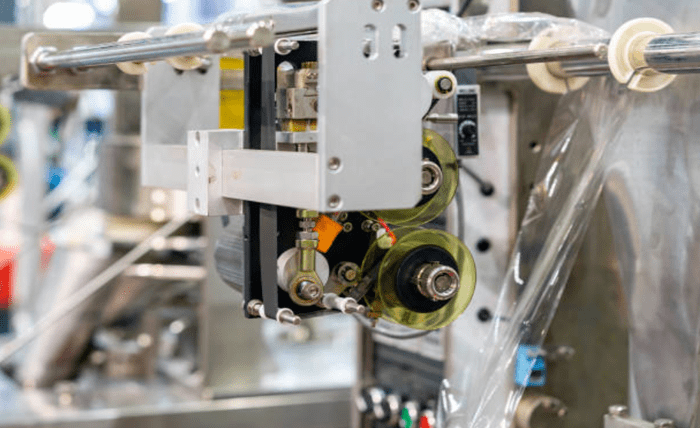
Maintaining the seals on food products to keep them fresh, protected, and uncontaminated is very vital for manufacturers. Seaming machines, like other food packaging machines, are important in protecting the integrity of the product’s packaging. These machines achieve secure and leak-proof seals to stop contamination and spoilage from taking place. This post will focus on how seaming machines work, their advantages and importance in the food industry, particularly on how they help achieve leak proof and secured packaging.
The Role of Seaming Machines
Seaming, in the food servicing context, is the term used to describe the process of applying closure seals in food containers. In general, seaming machines are employed to seal leaky lids of metal containers or cans. Unlike ordinary food packaging machines, seaming machines produce seals that are not only airtight, but also leak-proof and tamper-proof. To seam a can is to fold the metal lid of a can over the edge and apply force around the entire edge of the lid to compress it to the body of the can forming a hermetic seal. This helps to reduce spoilage, maintain product freshness, and preserve quality while protecting it from environmental elements like humidity and air. Canned foods such as beverages, fruits, vegetables, and ready-to-eat meals are staples in many diets. The can seaming machine greatly benefits the manufacturer, but most importantly, it guarantees the consumers that the sealed products are safe to eat or drink without losing their flavor and nutrients. Moreover, consistent use of seaming machines ensures uniformity in food packaging, which enhances the product’s branding and helps foster loyalty.
How Seaming Machines Ensure Leak-Free Packaging
Seaming machines are tiresome labor machines made with a purpose to seal containers perfectly without even a single leak. The process starts with the lid being set to the can or container, after which the machine uses rollers along with pressure to tightly fold and crimp the lid around the container’s edge. This type of molding not only prevents the introduction of air, but also bacteria that could lead to turmoil, thus aiding in maintaining food products. The machine’s design and precision can determine the seal to be tight and uniform on all containers. Any inconsistency in the seam can lead to leakage or contamination that would compromise the food’s safety and freshness. The modern day seaming machines possess a high tech computer coding that tracks the sealing process and makes sure all containers are sealed perfectly. Defects of any containers are also fed into the machine’s built-in sensors and automation systems to stop the production of faulty products. Such tremendous seaming precision make it possible to package a wide variety of food products while making sure they’re sealed and fresh for a long time.
In addition, seaming machines offer economical packaging options which minimizes the chance of costly product recalls caused by defective seals.
Ensuring Food Safety Hospitality With Proper Sealing While Supporting
Sustainability\r\n\r\nEfficient packaging is paramount in guaranteeing the safety of food products. Containers that are not sealed correctly create a window for air, bacteria, and other contaminants to penetrate which ultimately worsens food safety and hygiene. If left unchecked, these factors can lead to extreme health concerns such as food poisoning over a longer period of time due to toxins caused by harmful bacteria like Salmonella or Botulinum. To mitigate these cases, food packaging devices, especially ones with seaming technology rightfully integrated, ensure food is sealed properly with precision and consistency so that the product’s hygiene and quality is secured until it reaches the consumer . Moreover, properly sealed containers helps in retaining the leakage of air, flavor, texture, nutritional value, alongside ensuring better experience for the end users while reducing product recalls and customer dissatisfaction. In addition, food manufacturers are able to reduce food wastage by resting on qualified can seaming machines. By extending the shelf life of food products due to leak free sealing of containers, spoilage of food during transport, storage, and distribution is efficiently reduced. This enables sustainable efforts fixing waste while allowing the food to be distributed in a more effective way.
In addition, many new seaming machines integrate fully with recyclable packaging, which lessens the negative impacts of packaging waste on the environment, and further advances green practices within the sector. In addition, seaming machines guarantee that packaging is airtight, which improves safety in the food industry as well as the protection of the brand.
Improvements in Joining Processes of Modern Seaming Machines
The capabilities of seaming machines are being enhanced with the integration of speed, precision, and reliability centered technologies. Modern systems are easily integrated with automation, digitized controls, and real-time monitoring systems capable of identifying and rectifying sealing errors on the fly. This makes certain that every can or container is sealed with maximum efficiency, minimum breakage, and guarantees consistency. These systems have such high accuracy that human error is greatly reduced, and there is no doubt that all sealed containers will pass quality control checks. In addition to the above, the latest food package sealing machines improve the accuracy of the seal by incorporating various container materials such as aluminum, tin, and composite substrates. These machines are made so that a wide array of food products can be packed in different types of containers. These advancements also have a positive impact in the food industry as many new seaming machines are made to use energy efficient motors which reduces the amount of energy used in production. In turn, manufacturers cut costs while still making packaging that supports modern sustainability requirements. Furthermore, these new features boost production efficiency and can satisfy the ever-growing competition for quality food packaging on the market.
Conclusion
Seaming machines play a vital role in modern packaging systems that are secure, hygienic, and efficient for food. By using seals that are airtight and preventing contamination to the product, these machines play a role in the safety of food, minimization of waste, and even contribution to sustainability. As newer food packaging machines are developed, the importance of these machines will only continue to enhance as they preserve and comply with the industrial requirements. With advanced designs and technological development, seaming machines surely have the ability to provide reliable and leak-proof food packages. These machines offer enhanced design and development shifts in seaming technology in which high demand for durable, quality and environmentally friendly packaging is achieved with minimal impact to the planet and exceptional market experience. It is therefore obvious that these machines provide a lot of benefit to the food packaging industry, enabling increased safety and efficiency while ensuring that food products are kept fresh and safe for consumption.