
So you’re thinking about unregistering a SIM card? Lots of people ask about this. Maybe you stopped using a number. Maybe you sold your old phone. Or maybe you found out a SIM card is still registered under your name and you want it gone fast. SIM cards connect to way more than just calls and texts now.
Your number might link to:
- banking apps
- OTP codes
- social media
- mobile wallets
- online shopping
- work accounts
- identity verification systems
So keeping old unused SIM cards under your name? Not always a great idea. The good news? Most telecom companies now offer ways to deactivate or remove SIM registration properly.
But the process depends on:
- your carrier
- local laws
- whether the SIM is active
- whether the number still belongs to you
Let’s break everything down.
What Does Unregistering a SIM Card Mean?
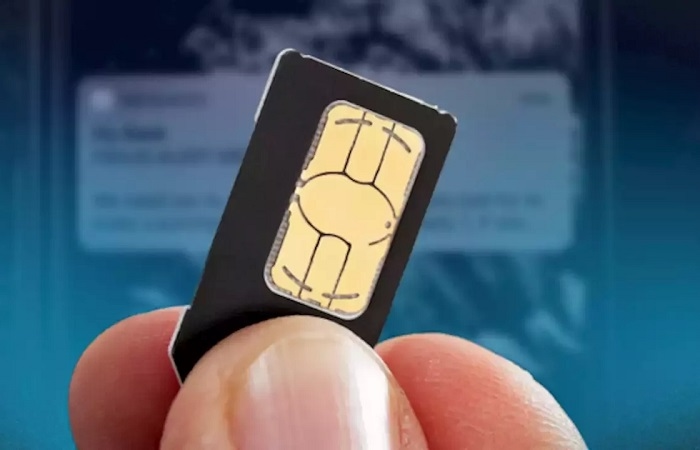
SIM unregistration usually means removing a phone number from your ownership or carrier account.
This can involve:
- deactivating the SIM
- canceling the line
- removing identity registration
- disconnecting carrier service
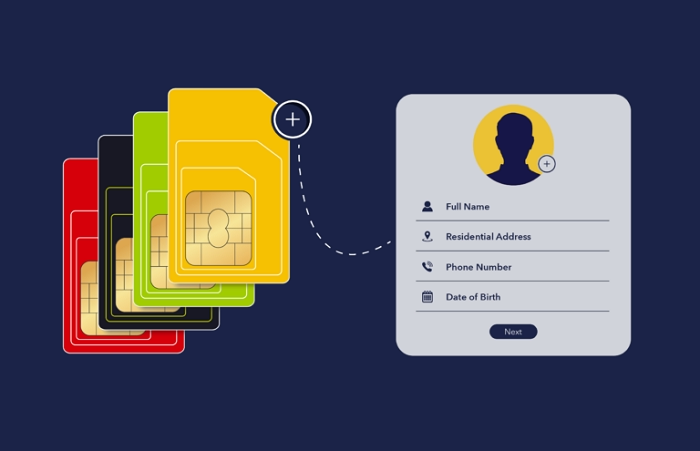
In many countries, telecom companies legally connect SIM cards to real identities now.
Why People Unregister SIM Cards
There are lots of reasons.
Old Numbers No Longer Used
People often keep unused SIM cards for years.
Selling or Giving Away Phones
Very important before transferring devices.
Privacy Concerns
Some users don’t want inactive numbers tied to their identity anymore.
Too Many Registered SIMs
Some countries limit how many SIM cards one person can own.
Lost or Stolen SIMs
Users may remove ownership for safety reasons.
SIM Registration Became Much Stricter
Years ago, SIM cards were basically anonymous in many places.
Now most telecom providers require:
- government ID
- address information
- selfie verification sometimes
- account authentication
This changed mobile security a lot.
Can You Fully Unregister a SIM Card?
Usually yes. But the exact process varies heavily by carrier and country.
Some carriers:
- fully deactivate the number
- remove registration records
- recycle the number later
Others may keep limited records for legal reasons.
How to Unregister a SIM Card
There are several common methods.
Contact Customer Support
This is often the easiest option.
Most carriers now support:
- hotline assistance
- live chat
- social media support
- carrier apps
You’ll usually need identity verification first.
Visit a Telecom Store
Sometimes this works faster.
Bring:
- your ID
- the SIM card if possible
- account information
- proof of ownership if needed
Store staff can usually process the request directly.
Use Carrier Apps
Many telecom apps now allow users to:
- deactivate lines
- suspend service
- manage SIM ownership
- request account removal
This became very common in 2026.
Use Carrier Websites
Some carriers allow online account management through secure portals.
Users may find options like:
- cancel line
- remove SIM
- deactivate number
- account closure
What Happens After SIM Unregistration?
Usually the carrier:
- disables calls
- disables texts
- removes network access
- disconnects mobile data
The number eventually becomes inactive.
Can Someone Else Use the Number Later?
Sometimes yes.
After a waiting period, carriers may recycle unused numbers and assign them to new customers.
Why SIM Unregistration Matters
This became much more important lately because phone numbers now connect to:
- banking systems
- online authentication
- password recovery
- mobile wallets
- social media accounts
Leaving unused SIMs active can create security risks.
SIM Unregistration for Lost Phones

If your phone disappears, acting quickly matters.
Usually best steps include:
- contacting the carrier immediately
- blocking the SIM
- changing important passwords
- notifying your bank if needed
SIM Unregistration vs SIM Deactivation
People confuse these often.
SIM Deactivation
Temporarily disables service.
SIM Unregistration
Usually removes ownership or permanently closes the account.
Can Prepaid SIMs Be Unregistered?
Yes.
Though sometimes prepaid SIMs simply expire automatically after long inactivity.
Usually when:
- no reload happens
- no calls are made
- no texts are sent
Can Postpaid SIMs Be Unregistered?
Absolutely.
Though carriers may require:
- bill payment completion
- contract closure
- identity verification
What About eSIMs?
eSIMs can also be removed or deactivated.
Usually through:
- carrier apps
- device settings
- telecom support systems
How to Remove eSIM Profiles
Modern phones often let users erase eSIM profiles directly inside settings. Though this doesn’t always fully cancel carrier service automatically.
Common Problems During SIM Unregistration
Sometimes users face issues like:
- unpaid balances
- identity mismatch
- forgotten account details
- inactive account access
- pending contracts
Why Carriers Verify Identity Before Removal
Security reasons. Imagine if anyone could cancel your number without permission. That could create huge fraud problems.
SIM Ownership Problems
This happens surprisingly often.
Especially when:
- family members registered SIMs for others
- old IDs were used years ago
- users forgot which ID registered the number
Why SIM Security Matters More Today
Years ago, losing a number mostly meant losing calls.
Now it could affect:
- bank access
- OTP verification
- account recovery
- digital wallets
- business communication
Common SIM Unregistration Scams
Be careful online.
Scammers sometimes pretend to help users remove SIM registration.
They may ask for:
- OTP codes
- passwords
- banking information
- account logins
Never share sensitive codes with strangers.
How to Stay Safe Before Unregistering a SIM

Some important steps help a lot.
Update Important Accounts
Move banking and authentication systems first.
Backup Contacts
Especially if contacts are stored on the SIM.
Remove Two-Factor Authentication
Or transfer it to another number.
Log Out of Apps
Helpful for security.
Save Important Messages
You may lose SMS access later.
Can You Reactivate a SIM After Unregistering?
Sometimes yes.
But it depends on:
- carrier policy
- how long ago it was canceled
- whether the number got reassigned
What Happens if You Simply Stop Using the SIM?
Eventually many carriers automatically deactivate inactive SIM cards.
But this process varies heavily.
Why Some Users Keep Backup SIMs
Many people now maintain secondary SIMs for:
- travel
- business use
- emergency backup
- separate banking numbers
How Long Before Numbers Get Recycled?
This varies by telecom provider.
Could take:
- weeks
- months
- longer periods
Quick Summary Table
| Situation | Recommended Action |
| Old unused SIM | Unregister or deactivate |
| Lost phone | Block SIM immediately |
| Selling phone | Remove SIM ownership |
| eSIM removal | Delete profile and contact carrier |
| Too many registered SIMs | Remove inactive numbers |
| Postpaid closure | Pay remaining balance first |
FAQs
Can I unregister a SIM card completely?
Usually yes, depending on carrier rules.
Do I need an ID to unregister a SIM?
Most carriers require identity verification.
Can prepaid SIMs be unregistered?
Yes.
What happens after SIM unregistration?
The SIM loses network access and becomes inactive.
Can someone else use my old number later?
Possibly after carrier recycling.
Can eSIMs also be removed?
Absolutely.
Is SIM unregistration the same as deactivation?
Not always.
Should I remove banking apps before unregistering?
Definitely.
Honestly, SIM unregistration matters much more now than it did years ago.
Mostly because phone numbers became deeply connected to:
- banking
- online identity
- authentication systems
- digital security
- work communication
The good thing though? Telecom companies made account management much easier in 2026.
Whether you’re:
- replacing an old number
- removing inactive SIMs
- protecting yourself after losing a phone
- cleaning up unused accounts
there are usually safe and simple ways to handle it properly. And acting early helps avoid much bigger problems later.